
How to Find Domestic Helper Jobs in Singapore (2026): Complete Guide
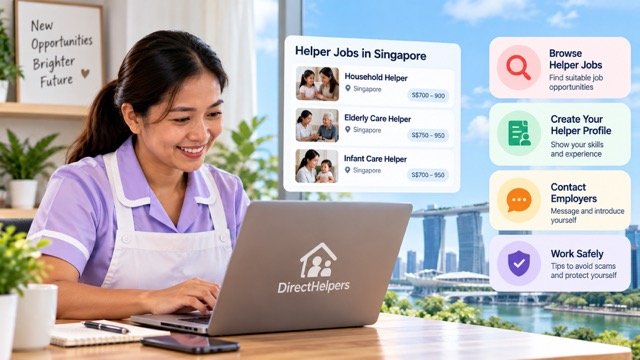
Looking for maid jobs in Singapore? Whether you are an experienced transfer helper or exploring your next domestic helper job, it is important to find an employer who understands your skills, offers clear working conditions and follows Singapore's employment rules.
This guide explains where to look for domestic helper jobs, how to create a strong profile, how to contact employers and what to check before accepting an offer. It is written in simple English to help you make informed decisions.
1. Where Can You Find Maid Jobs in Singapore?
Domestic helpers may learn about opportunities through job-listing platforms, personal recommendations and, where applicable, licensed employment agencies. Direct-hiring marketplaces allow employers and helpers to communicate directly, but you should always check whether an opportunity is genuine.
| Job search method | What to expect | What to check |
|---|---|---|
| Direct-hiring marketplace | Browse jobs, build a profile and communicate with interested employers. | Confirm the employer's identity, job details and legal transfer or hiring process. |
| Recommendations | Friends or other helpers may share openings. | Do not assume an offer is genuine just because someone recommended it. |
| Licensed employment agency | An agency may assist with matching and administrative steps. | Verify its licence and understand any permitted fees before agreeing. |
2. Understand What Kind of Helper Job You Want
Before applying, think about your experience and the type of work you can do confidently. A clear job preference helps you find a suitable family.
- Baby care: Feeding, changing diapers and following parents' safety instructions.
- Childcare: Supervising children, preparing meals and helping with daily routines.
- Elderly care: Providing companionship and assisting with everyday activities within your training and ability.
- Housekeeping: Cleaning, laundry, ironing and household organisation.
- Cooking: Preparing meals and following the family's dietary needs.
- Pet care: Feeding and caring for household pets, where agreed.
Be honest about tasks you have done before and tasks you still need to learn. You do not need to claim experience in everything.
3. How to Create a Strong Domestic Helper Profile
A useful profile helps employers understand who you are and whether you match their household needs.
- Use a clear, recent photo. Choose a simple photo that shows your face clearly.
- Describe your experience. Explain how long you have worked and the tasks you have handled.
- List your skills. Include childcare, cooking, housekeeping, elderly care or other genuine skills.
- State your availability. Explain whether you are a transfer helper and when you may be available, subject to MOM requirements.
- Write a short introduction. Use friendly, simple language.
- Review your details. Make sure your contact information and work preferences are accurate.
Register your free helper profile on DirectHelpers.
4. How to Browse and Compare Helper Jobs
When you browse domestic helper jobs, do not choose a job based only on the advertised salary. Read the full description and compare the responsibilities.
| Job detail | Questions to ask |
|---|---|
| Household members | How many adults, children or elderly family members live at home? |
| Main duties | Is the priority childcare, elderly care, cooking or housekeeping? |
| Salary | What monthly salary is offered, and when will it be paid? |
| Rest days | How will weekly rest days be arranged under MOM rules? |
| Accommodation | Where will you sleep, and what living arrangements are provided? |
| Start date | When does the employer need help, and is the date possible under the Work Permit process? |
5. How to Contact an Employer
Send a short, polite message introducing yourself. Mention the job you are interested in and your relevant experience. Avoid sending your passport number, Work Permit details or other sensitive documents to strangers during the first conversation.
“Hello, I saw your helper job listing and would like to apply. I have experience in housekeeping and childcare. I am available to discuss the duties, salary and rest days. May I know more about your family's needs? Thank you.”
If an employer is interested, arrange a proper conversation or interview before making a decision.
6. Prepare for Your Domestic Helper Interview
Employers may ask about your previous jobs, daily routines, cooking skills, childcare experience and how you handle difficult situations. Answer honestly, and ask your own questions too.
Useful questions to ask an employer
- What are my main daily responsibilities?
- How many people will I care for?
- What salary and payment date are you offering?
- How will my rest days be arranged?
- Will I have a suitable place to sleep and enough food?
- What should I do if I am sick or need medical attention?
- What is the expected start date?
Employers can also read the domestic helper interview questions guide.
7. Finding a New Employer as a Transfer Helper
If you are already working in Singapore and want to change employers, a transfer is subject to MOM's process and applicable consent and timing requirements. Do not begin working for another household before the proper Work Permit arrangements are completed.
- Discuss your situation respectfully with your current employer where safe and appropriate.
- Search for suitable jobs and speak with potential new employers.
- Confirm the salary, duties, rest-day arrangements and proposed transfer date.
- Ensure the new employer follows MOM's transfer application requirements.
- Start work for the new employer only when legally permitted.
Read more in the direct-hire transfer helper guide and Work Permit guide.
8. Understand Salary, Rest Days and Employment Conditions
Singapore does not set one universal statutory minimum monthly salary for all migrant domestic workers. Pay should be agreed clearly and must meet any applicable conditions, including requirements that may apply based on the helper's source country.
Under MOM's rest-day rules, migrant domestic workers are entitled to a weekly rest day, with at least one rest day each month that cannot be compensated away. Other rest days may be worked only under the applicable agreement and compensation rules. Clarify the arrangements before accepting a job.
Domestic workers are not covered by Singapore's Employment Act. Annual leave and other additional benefits should be discussed and documented in the employment agreement rather than assumed to be automatic statutory entitlements.
For more information, see our domestic helper salary guide and employment rules guide.
9. Work Permit Requirements Matter
Foreign domestic helpers must have the correct Work Permit and meet MOM requirements to work legally in Singapore. An employer is responsible for applying for the appropriate permit and meeting relevant obligations. Being offered a job does not automatically mean you can start work immediately.
Requirements can differ for helpers arriving from overseas and those transferring within Singapore. Always check the current rules on the official MOM domestic worker Work Permit website.
10. How to Avoid Helper Job Scams
- Check that the person contacting you is a genuine prospective employer.
- Do not share passwords, banking PINs or one-time passwords.
- Do not send money simply to “reserve” a job.
- Confirm job duties, salary, rest days and accommodation before accepting.
- Keep records of important conversations and agreed employment terms.
- If you feel threatened or unsafe, seek help from the appropriate authorities or support organisations.
11. Your Job Search Checklist
- ☐ I know what type of household work I want to do.
- ☐ My profile describes my real experience and skills.
- ☐ I have read the job description carefully.
- ☐ I understand the offered salary and rest-day arrangements.
- ☐ I have asked about accommodation, meals and medical care.
- ☐ I understand that a valid Work Permit is required.
- ☐ I have checked that the job opportunity is genuine.
Find Your Next Domestic Helper Job
Explore opportunities and introduce yourself to employers looking for domestic helpers in Singapore. Creating a helper profile on DirectHelpers is free.
Browse Helper JobsCreate Free Helper ProfileFrequently Asked Questions About Maid Jobs in Singapore
Where can I find maid jobs in Singapore?
You can explore job listings on direct-hiring platforms, ask trusted contacts about opportunities or use licensed employment agencies. Always check job details and follow MOM requirements.
Is it free for helpers to register on DirectHelpers?
Yes. Helpers can create a profile for free on DirectHelpers.
Can I find a transfer helper job in Singapore?
If you are eligible to transfer, you may look for a prospective employer. The transfer must follow MOM's applicable process and timing requirements before you start working for the new employer.
Do I need a Work Permit to work as a domestic helper?
Yes. Foreign domestic workers need the appropriate valid Work Permit and must follow the conditions attached to it.
Can I apply for a job without experience?
You may express interest in suitable roles, but be honest about your skills. Whether you can be hired depends on the employer's needs and applicable MOM eligibility requirements.
What should I ask before accepting a helper job?
Ask about daily duties, salary, rest days, accommodation, meals, medical care, household members and the legal hiring or transfer process.
Does DirectHelpers act as a maid agency?
No. DirectHelpers is a direct-hiring marketplace that helps employers and helpers connect. It is not an employment agency and does not replace MOM's official hiring and Work Permit procedures.
Final Thoughts
Finding the right domestic helper job is about more than getting an offer. Look for a household where your experience matches the duties, expectations are clear and everyone understands their responsibilities. Take time to ask questions, check the legal process and choose carefully.
Disclaimer: This guide provides general information, not legal or immigration advice. Singapore's rules may change. Always refer to the Ministry of Manpower for current requirements. Job listings and hiring decisions are the responsibility of the relevant parties.